About NLP
Since 1975
Many have called NLP the User Manual to the Brain. How to use your brain on purpose to get better results and get life the way that we want it. The name “Neuro – Linguistic Programming” indicates the integration of three different scientific fields – the neurological, linguistic and cognitive sciences – according to “Encyclopedia of Systemic Neuro – Linguistic Programming and NLP New Coding” of Robert Dilts and Judith DeLozier. The letter N in NLP is about the neuro component of Neuro – Linguistics, it is about the nervous system, a large part of NLP which has to do with understanding and using how we use our brain and body to produce our life results.
NLP also draws from the field of linguistics, where the second letter L stands for, In the NLP view, language is in some ways a product of our nervous system, but language also stimulates and shapes the activity within our nervous system. Thus, effective communication and interaction has to do how we code information from the world around us and internal thoughts so that we can make sense of them. How we communicate our thoughts to others.
The programming aspect of NLP, the letter P in NLP, is based upon the idea that the processes of human learning, memory, and creativity, are a function of programs – neurolinguistic programs that function more or less effectively to accomplish particular objectives or outcomes. It believes that we interact with our world through our inner programming, based on how our brain and body reacts to various internal thoughts and external information to produce repetitive behaviour, habits and thinking.
Perhaps the most important aspect of NLP is its emphasis on practicality. NLP concepts and training programs emphasize interactive, experiential learning contexts so that the principles and procedures may be readily perceived and understood. Since NLP processes are modelled from effective people, their value and underlying structures are often intuitively recognized by people with little or no previous experience.
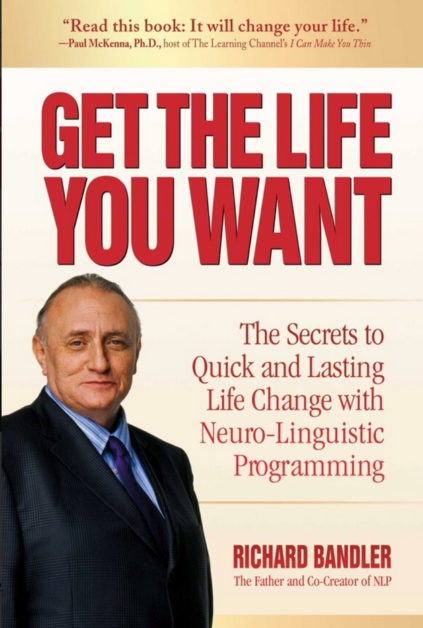
The founders of NLP are John Grinder, whose background was in linguistics, and Richard Bandler, whose background was in mathematics and gestalt therapy. They developed NLP in the 1970s by modeling successful therapists, like Fritz Perls, the creator of Gestalt Therapy, and Virginia Satir, internationally renowned family therapist, as well as communication experts, aiming to understand and replicate their techniques. They published influential books like “The Structure of Magic” and “Patterns of Hypnotic Techniques of Milton H. Erickson, M.D.” that outlined their findings.
Key contributions of Bandler and Grinder to NLP:
Modelling:
They developed the concept of “modelling,” which involves identifying and replicating the patterns and strategies of highly effective individuals in their field.
Meta-Model:
They introduced the “Meta-Model,” a set of linguistic patterns that can reveal and help eliminate limiting beliefs and assumptions.
Milton Model:
They also identified and detailed the “Milton Model,” which includes language patterns used by Milton Erickson in his hypnotic techniques.
Techniques for Change:
They developed techniques like state anchoring and others, which aim to help individuals change their thoughts, feelings, and behaviors.
Their relationship and later separation:
While they collaborated extensively, Bandler and Grinder later had a professional and personal falling out, leading to separate NLP pathways. Bandler continued to develop and teach his own brand of NLP, while Grinder focused on a more theoretical and academic approach.
Impact on NLP:
Despite the separation, the original work of Bandler and Grinder remains a foundation for many NLP practitioners and trainers. Their research and publications continue to be widely studied and is widely used in various fields, including business, coaching, therapy and education, psychotherapy, communication, and business. NLP is a set of models, skills and techniques one can use to achieve specific and desired outcomes. With the use of the language of the mind we increase our choices and enhances the quality of our lives.
Emma's story: A Journey of Transformation Through NLP (In this story, the name has been changed)
Emma had always been a dreamer. Growing up in a small town, she envisioned a life filled with adventure, purpose, and success. However, as she transitioned into adulthood, the weight of self-doubt and limiting beliefs began to hold her back. She was stuck in a job that didn’t fulfill her, trapped in a cycle of negative thinking that prevented her from pursuing her passions.
One day, while browsing online, Emma stumbled upon a practitioner training on Neuro – Linguistic Programming (NLP). Intrigued by the promise of personal transformation, she decided to take the plunge and sign up. Little did she know that this decision would change her life forever.
During the training, Emma was introduced to the core concepts of NLP. She learned about how her brain processed thoughts and emotions, and how the language she used—both with herself and others—shaped her reality. With the guidance of an experienced NLP trainer and coach, she began to identify the limiting beliefs that had been sabotaging her happiness. Phrases like “I can’t,” “I’m not good enough,” and “What if I fail?” echoed in her mind, but now she had the tools to challenge and reframe them.
As she practiced various NLP techniques, Emma discovered the power of visualization. She started to imagine her ideal life—one where she pursued her passion for photography, traveled the world, and inspired others through her art. With each visualization exercise, she felt more empowered to take action.
One particularly transformative moment came when she learned about the process of anchoring—a technique that allowed her to associate a physical touch with feelings of confidence and determination. With her newfound anchor, Emma began to step outside her comfort zone. She initiated conversations with photographers she admired, shared her artwork online, and even applied for a local photography competition.
As the months went by, Emma’s life began to shift dramatically. The negative thought patterns that once held her back started to dissolve, replaced by a mindset filled with possibility and resilience. She won the photography competition, gaining recognition and offers for her work. Feeling inspired, she launched her own photography business, capturing the beauty of the world and sharing her passion with others.
But perhaps the most significant impact of her NLP journey was not just in her personal achievements; it was the way she began to help those around her. Emma started hosting workshops for young people in her community, teaching them the principles of NLP and encouraging them to break free from their limitations. She loved seeing the light in their eyes as they realized their potential and began to pursue their dreams.
Today, Emma is a renowned photographer, speaker, and mentor, living a life she once thought was out of reach. Her journey through NLP not only transformed her life but allowed her to create a ripple effect of positivity and empowerment in the lives of others.
Emma’s story serves as a testament to the incredible potential of NLP to unlock our true selves, guiding us towards a life filled with purpose, passion, and the courage to fulfill our dreams.